So far I've discovered these online resources for charting enviromental data from a sensor network
pachube.com - the youtube of sharing environmental data
-has lots of code sample for arduino, php and processing
-looks very promising
-the shortest route to sharing information so far
Google Power Meter
http://www.google.com/powermeter/about/
Google chart API
http://code.google.com/apis/chart/
If I build my own php app, this likily to be used
Wednesday, September 15, 2010

Temperature Sensors
- Sparkfun Digital Temperature Sensor Breakout - TMP102
- Texas Instruments TMP102
- 12-bit, 0.0625°C resolution
- Accuracy: 0.5°C (-25°C to +85°C)
- Low quiescent current
- 10µA Active (max)
- 1µA Shutdown (max)
- 1.4V to 3.6VDC supply range
- Two-wire serial interface
- $5.95
- Datasheet
- Sparkfun One Wire Digital Temperature Sensor - DS18B20
- Maxim DS18B20
- Maxim 1-Wire® interface
- Requires no external components
- Can be powered from data line. Power supply range is 3.0V to 5.5V
- Measures temperatures from –55°C to +125°C (–67°F to +257°F)
- ±0.5°C accuracy from –10°C to +85°C
- Thermometer resolution is user-selectable from 9 to 12 bits
- Converts temperature to 12-bit digital word in 750ms (max.)
- $4.25
- Datasheet
- Sparkfun Temperature Sensor - LM335A
- National Semiconductor LM335A
- Analog 10mV/°K
- typically less than 1°C error over a 100°C temperature range.
- Range −40°C to 100°C.
- $1.50
- Datasheet
- Thermistor 10K
- Generic
- Range - 40 °C to + 125 °C
- Sparkfun $1.95 (much cheaper elsewhere)
- Sparkfun Data Sheet
- more
- Electronic brick - Temperature sensor(Analog) [ELB108C5M] - $3.50 : Seeed Studio Depot, Boost ideas, extend the reach
- Electronic brick - Indoor Temp & Humidity sensor [ELB146D2P] - $9.50 : Seeed Studio Depot, Boost ideas, extend the reach
- Temperature sensor with steel head [SEN118A2B] - $1.50 : Seeed Studio Depot, Boost ideas, extend the reach
- Sensiron Temperature/Humidity Sensor
- Thermocouple Amplifier (MAX6675) breakout board /
- Thermocouple Type-K Glass Braid Insulated
- Humidity and Temperature Sensor
How to Monitor a house
(Work in Progress)
In building sensor networks there are 2 main design patterns using either wired or wireless networks
Central System
Sensors connect to a central computer that handles all of the information.
Pro's
Distributed
Pro's
I plan on building a network that combines the strengths of both systems. Sensors in a house are often clustered together. I plan on building a set of sensor hubs that are placed through out the house and are interconnected building a mesh network. Each hub can read multiple sensors and relay this data to it's neighbors. passing along messages until it reaches an output point.
In building sensor networks there are 2 main design patterns using either wired or wireless networks
Central System
Sensors connect to a central computer that handles all of the information.
Pro's
- Only one computer to program
- Data is gathered all in one place
- Wireless: devices can sleep to save power when between gathering samples.
- Wireless: cheaper transmitters.
- If the computer crashes, no data can be gathered.
- Wired: lots of wires, and the signal gets degraded the longer the cable is.
- Wireless: All the sensors have to be in range of the base station
Distributed
Pro's
- Each sensors has it's own microcomputer that logs the data
- Data can be stored until it can be shared
- Less wires
- Network can withstand multiple device failures
- Complex
- Harder to program
- More hardware, More expensive
- Wireless: modules can't sleep because they have to relay the messages of others.
I plan on building a network that combines the strengths of both systems. Sensors in a house are often clustered together. I plan on building a set of sensor hubs that are placed through out the house and are interconnected building a mesh network. Each hub can read multiple sensors and relay this data to it's neighbors. passing along messages until it reaches an output point.
Input and Output
This post is an Index to future posts detailing available parts for building a complete sensor network
Input Sensors
Environmental
Energy/Resources
Proximity
Visual
Mechanical
Input Sensors
Environmental
- Temperature
- Humidity
- Light
- AirFlow
Energy/Resources
- Electricity
- Water
- Gas
Proximity
- Sonar
- Infrared
- Key
- RFID
- Door Latches
- Windows Break Sensors
Visual
- LED Lighting
- Screens
- Music Systems
- Security Alarm
- Audio Information System
Mechanical
- Shading Devices
- Doors
- Smart Phones
Tuesday, September 14, 2010
Master's Project Components
Part 1- Research Existing Smart Home Technology to incorporate into USF Solar Decathlon Project
Part 2 - Develop a new smart house network system to connect, sensors and control devices
Part -3 Look at how we as human interact with architecture and whether adding technology to architecture is a step in the right direction.
Part 2 - Develop a new smart house network system to connect, sensors and control devices
Part -3 Look at how we as human interact with architecture and whether adding technology to architecture is a step in the right direction.
Wednesday, September 1, 2010
Master's Project
After a very rough week, I am finally starting to work on my Architecture Thesis Master's Project. It's going to a year long project looking at the future of architecture and how new technology is going to change the way we interact with buildings.
I plan on keeping my blog as a journal of my research. I spent much of the summer doing preliminary research and finding sources and now It's time for me to review all of it and get my thoughts sorted out.
My Current Abstract:
Enabling Walls to Talk
Today, computers can be found in items we use everyday like our cars, coffee maker and toys but we have yet to truly integrate them into the buildings we create. Currently, the systems we use are an afterthought, a mess of wires running through walls back to a central computer. I propose that by using modular/prefab construction, a micro controller, a cheap single chip computer, can be integrated into every piece of building and joined together during assembly on site to create a distributed computer network that wraps around the building. This network will consolidate existing control systems like security systems and thermostat controls into a single unified system that creates a foundation for a whole new generation of integrated devices. This way, inputs like light switches and security sensors are programmed rather than hard wired to outputs like lights, shades, locks and other actuators, creating a very flexible environment.
I will build a prototype of such a system with the goal of patenting it and study how our interaction with our built environment changes. I will look at what happens when our buildings can interact with us with the same tools we use everyday like the internet, email, Facebook and Twitter. Users will be able to gain finite control over their surroundings and be better informed about their environmental impact.
Will being aware of what going inside our walls make us change the way live for the better?
I plan on keeping my blog as a journal of my research. I spent much of the summer doing preliminary research and finding sources and now It's time for me to review all of it and get my thoughts sorted out.
My Current Abstract:
Enabling Walls to Talk
Today, computers can be found in items we use everyday like our cars, coffee maker and toys but we have yet to truly integrate them into the buildings we create. Currently, the systems we use are an afterthought, a mess of wires running through walls back to a central computer. I propose that by using modular/prefab construction, a micro controller, a cheap single chip computer, can be integrated into every piece of building and joined together during assembly on site to create a distributed computer network that wraps around the building. This network will consolidate existing control systems like security systems and thermostat controls into a single unified system that creates a foundation for a whole new generation of integrated devices. This way, inputs like light switches and security sensors are programmed rather than hard wired to outputs like lights, shades, locks and other actuators, creating a very flexible environment.
I will build a prototype of such a system with the goal of patenting it and study how our interaction with our built environment changes. I will look at what happens when our buildings can interact with us with the same tools we use everyday like the internet, email, Facebook and Twitter. Users will be able to gain finite control over their surroundings and be better informed about their environmental impact.
Will being aware of what going inside our walls make us change the way live for the better?
Day 37 Flight Home
Somehow I forgot publish this post.
::Think back 1 year::
I just got back in the US. Right now I'm waiting at the Detroit airport for my flight to Orlando.
The day started out a little stress full. It took me a while to get all of my souvenirs packed so they wouldn't break on the way home. So far so good...
My day today went like this:
12 am- Got back from bowling
Packed
5:15am- left hotel took the local jr train to the Shinksen station to catch the 6am train
5:45am- Arrived at Station
5:46am- realized that I had misread the schedule and that first train for Osaka (that I could ride) didn't leave until 6:34
6:33am boarded the Shinkansen
9:30am Arrived in Shin-Osaka
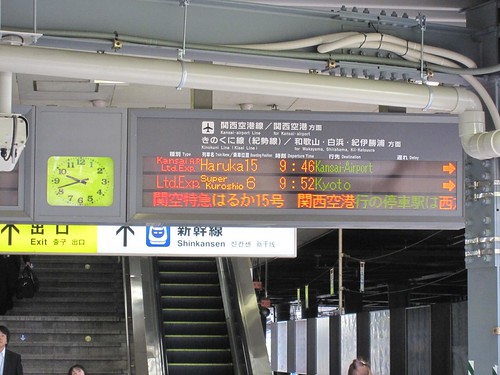
9:45ish caught the Kanisi Airport Limited Express
9:46am realized I got in the reserved car and had towalk through the cars to the unreserved section with all my luggage
10:30ish arrived at The airport
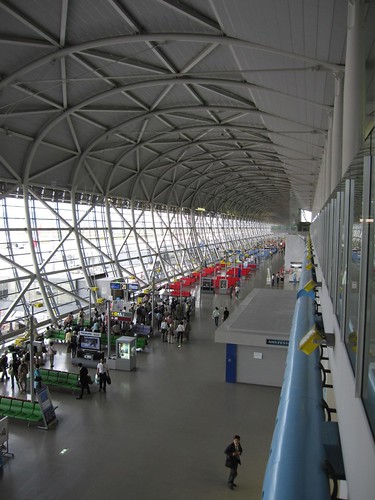
-took a view pictures on the way in.
10:35am Got to ticket counter and found out my flight departure time had been changed from 12:25 to 12:15
Went through security. No removing of shoes here
Took the train down to my gate- (If I was had gotten there early I would have walked and seen some more of the building)
11:26am got to the gate. Decided I had just enough time to get a few pictures and check out the lounge.
11:35am boarded the plane

1:55pm Arrived in Tokyo - we taxied forever to the gate- turns out we didn't even get one. we deplaned by stairs and took a bus to the terminal. Stood in security line forever. Its not good when a cog in the Japanese machine gets jammed. They check the size of my tripod with a measuring tape, Weird, right? They didn't check this last time.
2:40pm got on the plane they were already doing the last call over the speakers.
I was worn out a slept most of the trip.
Landed on time in detroit
Went through customs. Almost forgot my Camcorder Bag.
Went the Sky lounge and started typing this out.
.........
Boarded Flight home.
Back in Florida!!!!
Well, I'm back home. It's amazing how quick one can leave one world and enter another.
The flight from Detroit to Orlando was one of the memorable I've had. I sat next to this young guy who was built like a football player. He tried to get a beer but he wasn't 21. The flight attendant gave him quite a speech.
Now onto a crazy week long studio to finish my design project.
::Think back 1 year::
I just got back in the US. Right now I'm waiting at the Detroit airport for my flight to Orlando.
The day started out a little stress full. It took me a while to get all of my souvenirs packed so they wouldn't break on the way home. So far so good...
My day today went like this:
12 am- Got back from bowling
Packed
5:15am- left hotel took the local jr train to the Shinksen station to catch the 6am train
5:45am- Arrived at Station
5:46am- realized that I had misread the schedule and that first train for Osaka (that I could ride) didn't leave until 6:34
6:33am boarded the Shinkansen
9:30am Arrived in Shin-Osaka
9:45ish caught the Kanisi Airport Limited Express
9:46am realized I got in the reserved car and had towalk through the cars to the unreserved section with all my luggage
10:30ish arrived at The airport
-took a view pictures on the way in.
10:35am Got to ticket counter and found out my flight departure time had been changed from 12:25 to 12:15
Went through security. No removing of shoes here
Took the train down to my gate- (If I was had gotten there early I would have walked and seen some more of the building)
11:26am got to the gate. Decided I had just enough time to get a few pictures and check out the lounge.
11:35am boarded the plane
1:55pm Arrived in Tokyo - we taxied forever to the gate- turns out we didn't even get one. we deplaned by stairs and took a bus to the terminal. Stood in security line forever. Its not good when a cog in the Japanese machine gets jammed. They check the size of my tripod with a measuring tape, Weird, right? They didn't check this last time.
2:40pm got on the plane they were already doing the last call over the speakers.
I was worn out a slept most of the trip.
Landed on time in detroit
Went through customs. Almost forgot my Camcorder Bag.
Went the Sky lounge and started typing this out.
.........
Boarded Flight home.
Back in Florida!!!!
Well, I'm back home. It's amazing how quick one can leave one world and enter another.
The flight from Detroit to Orlando was one of the memorable I've had. I sat next to this young guy who was built like a football player. He tried to get a beer but he wasn't 21. The flight attendant gave him quite a speech.
Now onto a crazy week long studio to finish my design project.
Subscribe to:
Posts (Atom)